What Are Tension Headaches?
Tension headaches are extremely common. Many people know them as stress headaches, and that description is often accurate. Instead of sharp or throbbing pain, they usually cause a steady, dull ache.
Most patients describe a feeling of pressure or tightness across the forehead, the sides of the head, or the back of the neck. Some say it feels like their head is being gently squeezed. In medical terms, these are called tension-type headaches (TTH). You may also hear them referred to as muscle-related or stress-related headaches.
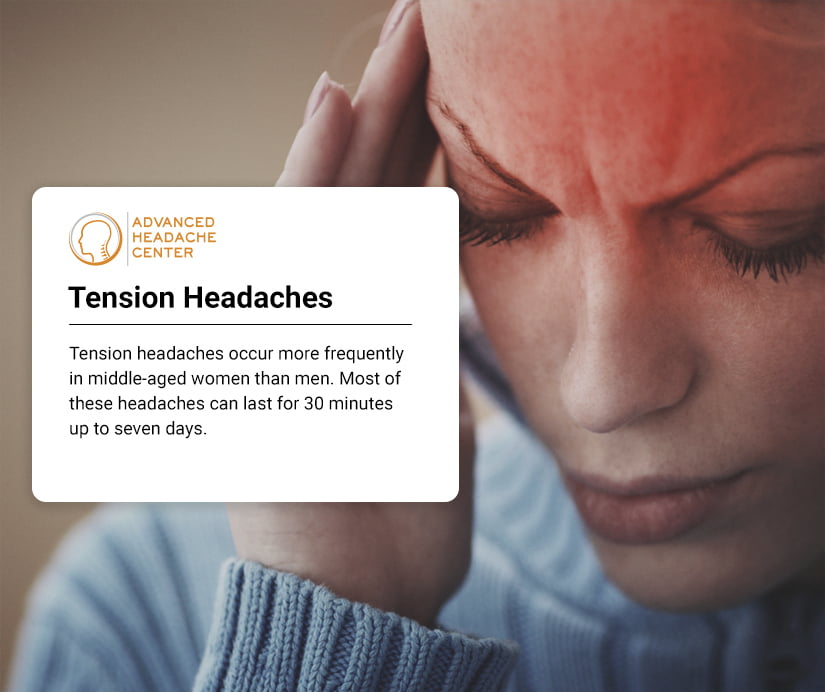
Tension headaches can vary widely in how long they last. Some resolve fairly quickly, while others are much more persistent.
- Short episodes may last as little as 30 minutes
- Longer episodes can continue for several days
- Chronic tension headaches may occur frequently or last up to a week at a time
Unlike migraines, tension headaches usually do not get worse with physical activity. Many people are still able to work, exercise lightly, or go about their day, even though the discomfort can be distracting and exhausting.
There is no single cause behind tension headaches. In most cases, several factors overlap and build on one another over time. Common contributors include:
- Muscle tension in the neck, shoulders, jaw, or scalp
- Prolonged sitting, poor posture, or desk-based work
- Emotional or psychological stress
- Poor sleep quality or irregular sleep schedules
- Dehydration or skipped meals
- Eye strain from screens or uncorrected vision
- Nutritional deficiencies
- Frequent use of pain medications, which can worsen headaches over time
- Genetics may also play a role, making some people more prone to developing recurring tension headaches than others.
At the Advanced Headache Center, Dr. Amr Hosny focuses on identifying what is actually driving each patient’s headaches. Rather than offering a one-size-fits-all solution, he looks at patterns, triggers, and lifestyle factors that may be contributing to ongoing pain. This often includes evaluating:
- Muscle tension and posture
- Daily habits and stress levels
- Diet, hydration, and vitamin status
- Medication use and possible overuse
By addressing these underlying issues, Dr. Hosny helps patients throughout New York City and New Jersey reduce headache frequency, manage pain more effectively, and improve overall quality of life.
Are Tension Headaches Common?
Tension headaches are the most common form of headaches. In fact, nearly half of the adult population suffers from some level of tension headache every month. Even more alarming perhaps is that one in 30 adults are diagnosed with chronic headaches that continue for three to six months. In these cases, the sufferers have to bear the pain for at least 15 days during those months.
Headaches can be debilitating, interrupting your day-to-day routines and working life. As a primary headache and cluster headaches and migraines, tension headaches require treatment from a headache specialist like Dr. Amr Hosny. At the Advanced Headache Center, with eight office locations across Midtown Manhattan and Bergen County, New Jersey, you can find a headache doctor near you.
What Causes Tension Headaches?
Tension headaches occur more frequently in middle-aged women than men. It isn’t uncommon, though, for teenagers to complain of such headaches as well. Stress and anxiety are the biggest culprits behind developing a tension headache.
Anxiety and stress aren’t the only causes linked to tension headaches. Other triggers that may put you at risk for these headaches include:
- Skipping meals, especially breakfasts, can lead to hunger pangs
- Bad posture
- Dehydration
- Bright sunlight
- Squinting
- Loud noises
- Very little or absolutely no physical activity
- Strong smells, such as perfumes or gasoline fumes
What Are the Symptoms of a Tension-Type Headache?
While tension headaches aren’t life-threatening, they cause you discomfort while increasing your stress levels. Most of these headaches can last for 30 minutes up to seven days. They don’t cause nausea or bouts of vomiting, unlike migraines, which do often cause these troubling symptoms.
Consulting a tension headache specialist like Dr. Hosny early on, when your symptoms first start, is the best way to get the most effective treatment. After he reaches his diagnosis, confirming that you’re suffering from tension headaches, he personalizes your treatment plan to accommodate you.
Your symptoms may include:
- Pain that develops slowly over time
- Headaches in the morning, which are usually the mildest of the day
- Pain on both sides of your head
- A feeling like there’s a tight band around your head or that your head is held in a vice grip
- Pain that’s usually dull and constant
- Pain at the back of your head, as well as in your neck
- Pain that’s usually mild to moderate
- Pressure behind your eyes
Aside from the type of headache pain that patients experience, another important thing to consider is the duration of the tension headache. Here are the 2 main types of tension headaches according to the International Headache Society:
- Episodic tension headache refers to headache pain that lasts from about 30 minutes up to a week. The patient may experience episodic tension-type headaches for less than 15 days a month for 3 months. If left untreated, this headache disorder may develop into a chronic tension-type headache.
- Chronic tension headache refers to the kind of tension-type headache that lasts for a few hours. Patients may experience continuous headache pain in their heads. A chronic tension-type headache may occur for an average of at least 15 days a month for 3 months.
TTH vs. Migraine Headache
Many people find it difficult to distinguish tension headaches from migraine headaches because of their similarities. But patients who have frequent tension headaches are also bound to have migraines.
The main difference between these conditions is that tension-type headaches don’t come with other migraine symptoms. Patients don’t experience nausea, visual disturbances, and vomiting when they have tension headaches. Some patients may experience sensitivity to sound or light during a stress headache episode, but this symptom is highly uncommon.
Migraine pain is also a lot more severe than tension headaches. It comes as pounding or throbbing pain that is focused on one side of the head. Knowing these differences comes in handy when managing headache pain using different treatment options.
What Types of Headaches Are Similar to Tension Headaches?
Since it’s possible to suffer from both a tension headache and a migraine simultaneously, diagnosis can be challenging. That’s why you need to rely on a headache specialist like Dr. Hosny from the Advanced Headache Center in NYC and northern NJ. With the latest medical technology and the most up-to-date medical knowledge.
Finding the right diagnosis for your headache depends on your symptoms and medical history. You may need to take some diagnostic tests to help Dr. Hosny confirm the cause of your pain.
He has to rule out all the other types of headaches, including:
- Sinus headaches
- Allergy headaches
- Spinal headaches
- Thunderclap headaches
- Post-concussion headaches
- Cervicogenic headaches
- Chronic migraines
- Hemiplegic migraines
- Basilar migraines
- Optical migraines
- Occipital neuralgia
- Trigeminal neuralgia
- Status migrainosus
Read more: Common Types of Headaches to Worry About
Diagnosing Tension-Type Headache
Although chronic pain caused by frequent tension-type headaches can be extremely disruptive, most medical experts agree that the headache disorders themselves don’t usually cause serious health concerns.
However, they may be a sign of an underlying health issue in some cases – like thyroid disease or a tumor. It may also be a symptom of a primary headache disorder like chronic migraine, so patients over the age of 50 are advised to keep a headache diary and consult a doctor immediately.
Doctors have 2 different ways to diagnose tension-type headaches: evaluating the patient’s pain description and conducting imaging tests. They can learn about a patient’s headache based on the pain location, intensity, and characteristics. Imaging tests like MRI and CT scans are usually reserved for complicated headaches to rule out underlying serious health conditions.
How Are Tension Headaches Treated in Midtown & Manhattan?
For tension headaches, your doctor may recommend home remedies first if your pain isn’t too severe. You can try applying a cold or hot compress to your head and neck. You can also take over-the-counter painkillers, like ibuprofen or acetaminophen, for relief. Still, you can’t take these medications for more than 10 days, as long-term use leads to medication overuse headaches.
I really enjoyed my experience and highly recommend this physician. Dr. Hosny is extremely knowledgeable and knows how to diagnose a severe headache. His treatments have been the most successful treatment to date to relieve my severe headache. The office staff is very friendly and cheerful, and highly qualified as well. Thank you very much for all your care
Dr. Hosny uses a multimodal approach, meaning he prescribes more than one modality often at the same time to address your condition. He may prescribe one or more of the following treatment plans for your tension-type headache:
Trigger Point Injections
Trigger point injections are performed to reduce headache pain by administering the medication into a nearby trigger point, a small and tender knot that may form in muscles or fascia. It’s a non-surgical, outpatient procedure that only takes a few minutes to complete in a doctor’s office.
During the procedure, the doctor locates a trigger point and cleans it before inserting the needle into the skin. The injection contains an anesthetic mixture that causes the trigger point to relax. Most patients experience relief after one trigger point injection while others might need additional injections.
Rational Polypharmacy
Rational polypharmacy uses more than one pain medication to treat the patient’s headache pain. A combination of rescue or preventive medications are especially helpful for certain headache disorders like chronic daily headache and tension headache, but it’s crucial to know which ones go well together to avoid rebound headache.
At Advanced Headache Center, our headache specialist closely works with the patient to determine the best course of treatment without worsening their symptoms. We may recommend medicines that prevent or stop episodic headaches.
Alternative Medicine
For patients who want to avoid medications, there are a few non-traditional and alternative therapies that can help relieve tension headache pain. Here’s what we offer at Advanced Headache Center:
- Physical therapy – This treatment option is extremely effective in treating headaches because it’s customizable depending on the patient’s needs. It may involve relaxation exercises, massage therapy, and others to relieve pain and strengthen muscles.
- Acupuncture – This popular relaxation technique is a form of traditional Chinese medicine that helps alleviate many types of pain conditions. It works by inserting hair-thin needles into specific parts of the body to stimulate the nervous system and relieve headache pain.
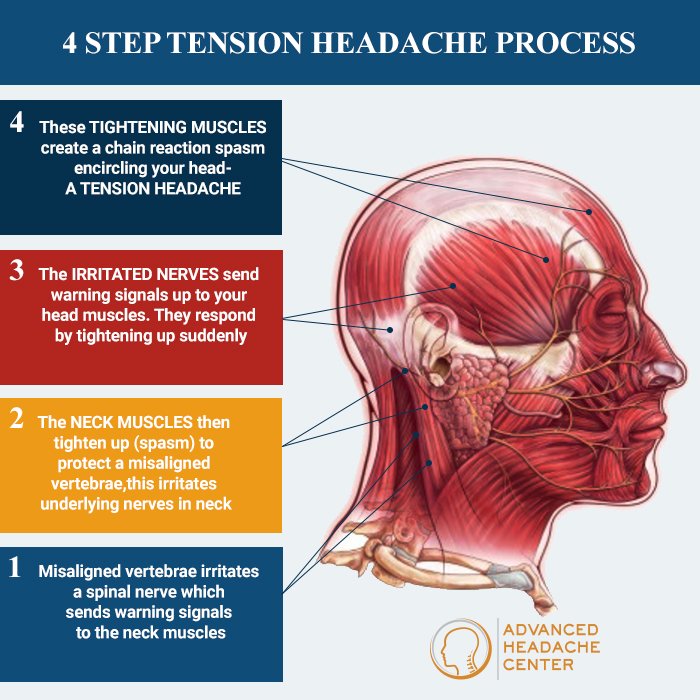
- Chiropractic care – Headaches and other pain conditions caused by spine misalignment are best treated with spinal manipulation or chiropractic adjustments. It relieves the tension from the system, resulting in long-lasting pain relief in the back, neck, shoulders, and head.
- Drinking more water
- Head massages
- Yoga and meditation techniques
- Acupuncture
- Physical therapy
- Chiropractic care
- A change in your diet
- Eating meals on a regular schedule without skipping any
- Sleeping more as part of a normal sleep routine
- Trigger point injections help to relax strained muscles, giving you immediate pain relief.
- Cognitive-behavioral therapy to help you manage your stress levels
- Decreasing alcohol and caffeine intake to prevent dehydration
- Practicing good posture while walking, standing, and sitting
A list of alternative treatments include:
To get the best tension headache treatment for permanent relief, turn to Dr. Hosny at the Advanced Headache Center. With eight locations across Manhattan and throughout Bergen County, NJ, you can find a qualified headache physician near you. Contact the practice today to schedule your initial consultation. Defeat your pain with tension headache treatment from a specialist.

Dr. Hosny is an Ivy League Trained, UCNS-accredited, board-certified headache specialist who offers the latest preventive and abortive treatments to provide safe and effective head pain relief. As an active member of prominent organizations and professional societies that advance headache science, education, and management, such as the National Headache Foundation, Dr. Hosny specializes in diagnosing and treating a wide range of head pain disorders, including tension headaches, migraines, and cluster headaches, to name a few.
Dr. Hosny's reputation for enhancing headache care quality through the use of the most effective and technologically advanced treatment options for persistent primary and secondary chronic headaches has been acknowledged by Castle Connolly and Healthgrades, where he has received over 200 positive reviews. Dr. Hosny is also recognized as a distinguished New York City physician and headache specialist by New York Magazine.
More about Dr. HosnyNew York, NY 10003
(646) 763-2222